
The Presidency Takes Shape
Federalist PapersThis thread traces the essays’ movement from suspicion of executive power to a defense of a unified, accountable presidency with defined checks.
increasing Bearing strength in each event
 decreasing
Bearing strength in each eventdecreasingMonarchical Allegations

Monarchical Allegations
A contested office
Hamilton opens the executive discussion by challenging portrayals of the proposed President as a king. He argues that critics exaggerate the office’s authority and misstate particular constitutional provisions.
A comparative defense
The essay proposes examining the office’s actual powers rather than relying on images of monarchy. This turns the debate toward institutional detail and comparison with State executives.
The Electoral Design

The Electoral Design
Indirect popular choice
Hamilton defends electors chosen for the specific purpose of selecting a President. The arrangement is meant to combine popular authorization with deliberation and to reduce opportunities for disorder and prearranged influence.
A contingent decision
If no candidate wins a majority, the House of Representatives chooses among the leading candidates. Hamilton presents this process as a way to ensure a definite result while favoring nationally respected candidates.
A Limited Executive

A Limited Executive
Powers compared
Hamilton compares the President’s election, term, veto, military role, treaty authority, and appointments with the British monarch and a State governor. The comparisons emphasize legal limits and institutional dependence.
Accountability retained
The President may be impeached and prosecuted, and legislative powers such as raising armies and declaring war remain elsewhere. The comparison seeks to show that a single executive need not be a monarch.
Unity and Responsibility

Unity and Responsibility
The case for one executive
Hamilton argues that unity promotes decision, activity, secrecy, and dispatch. A plural executive, by contrast, risks internal conflict that could obstruct action in urgent moments.
Visible accountability
A single magistrate makes it easier for the public to identify responsibility for executive conduct. The argument joins administrative energy to the possibility of political judgment and removal.
Checks on the President
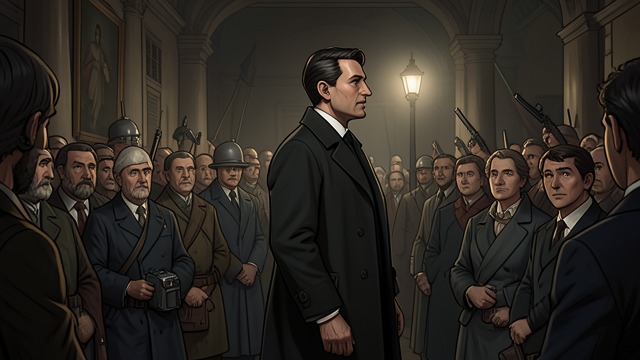
Checks on the President
Independent tenure
Hamilton defends the President’s term and eligibility for reelection as supports for firmness and continuity. He argues that constant dependence on immediate political currents could weaken executive judgment.
Constrained authority
The essays defend protected compensation, a qualified veto, shared treaty and appointment powers, and defined duties. The presidency is presented as energetic in execution but bounded by constitutional checks.
Federalist No. 67, March 11, 1788
Federalist No. 68, March 12, 1788
Federalist No. 69, March 14, 1788
Federalist No. 70, March 15, 1788
Federalist Nos. 71–77, March 18–April 2, 1788
